239 Bay 14th Street, Brooklyn, NY 11214
718-483-0000We also speak Polish: 631-871-2144

Spray foam insulation for New York homes and businesses

Puza

Spray foam insulation is a liquid material sprayed onto walls, roofs and floors, where it expands and hardens into a continuous layer. It fills gaps other insulation leaves open, slows heat moving in and out, and reduces noise, so one installation works as both thermal and acoustic insulation.

Insulation problems usually show up as a symptom. The upstairs is always hotter than the downstairs. The heat runs all day and the living room is still chilly. You can hear every word from the apartment next door.

Behind each of these there is usually the same thing: air and sound passing through parts of the building that were never sealed. Puza Construction, Inc. is a licensed and insured Brooklyn contractor, and closing those paths with spray foam is our everyday work.

What spray foam does that other insulation cannot

Batts and boards are cut to size and fitted into place. However carefully that is done, there are seams, and there are spots around pipes, wires and framing where the material simply does not reach. Air finds those spots. So does noise.

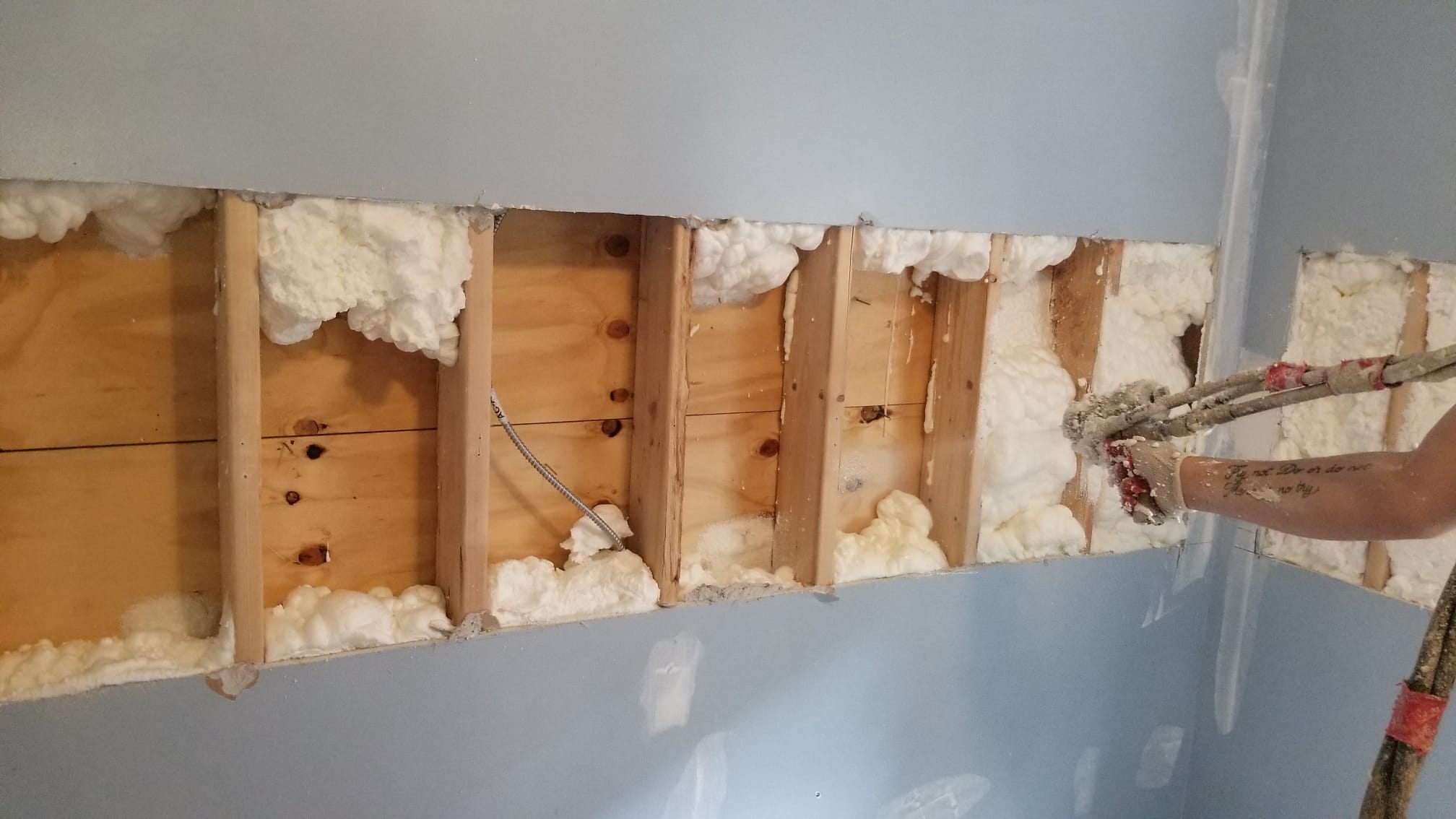
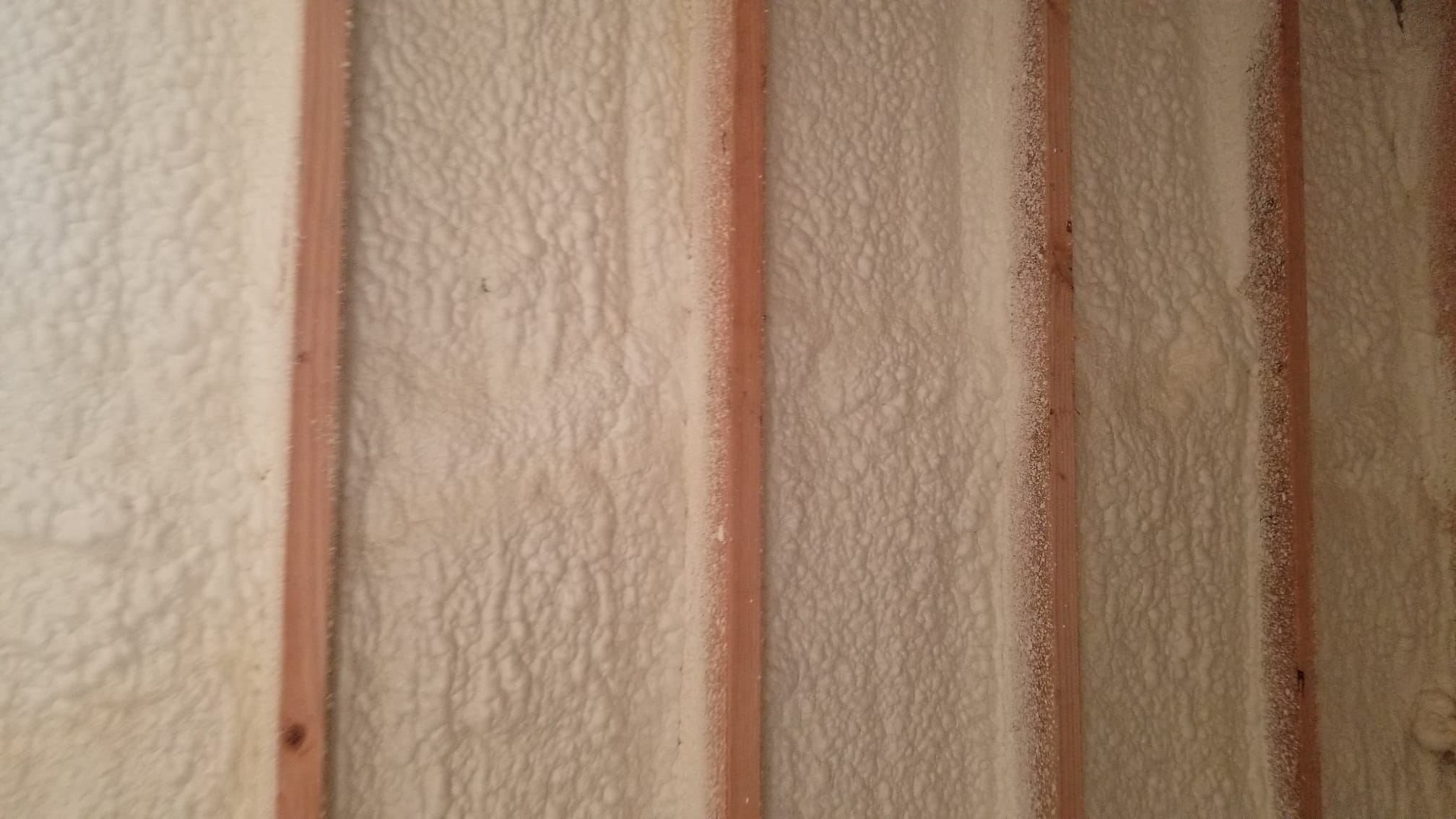
Foam works differently. It goes on as a liquid and expands into the cavity, wrapping around whatever is in the way. Once it cures, the insulation and the air seal are the same layer. Unlike loose-fitted material, it does not sag or slide out of place.
Puza

That is why foam helps in two ways at once. It slows heat transfer, which makes it easier to keep a steady temperature and takes strain off your heating and cooling. And it absorbs airborne sound and closes the gaps it travels through, both between rooms and from the street.

Open-cell and closed-cell foam

There are two main types of spray foam, and they are not interchangeable. Choosing between them is part of the estimate, not something you need to work out on your own.

01Open-cell foam

Open-cell foam is lighter and softer. It expands a lot, which makes it good at filling deep or irregular cavities, and it is the stronger performer for sound. Interior walls, floors between apartments and many attic jobs are typical uses.

02Closed-cell foam

Closed-cell foam is dense and rigid. It insulates more per inch, resists moisture and adds stiffness to whatever it is sprayed on. That makes it the usual choice for basements, crawl spaces, exterior walls with limited depth and metal surfaces.

Plenty of buildings need both, in different places. We will tell you which goes where and why.

Where we install it

  • Attics and rooflines — the first place heat escapes in winter and pours in during summer.
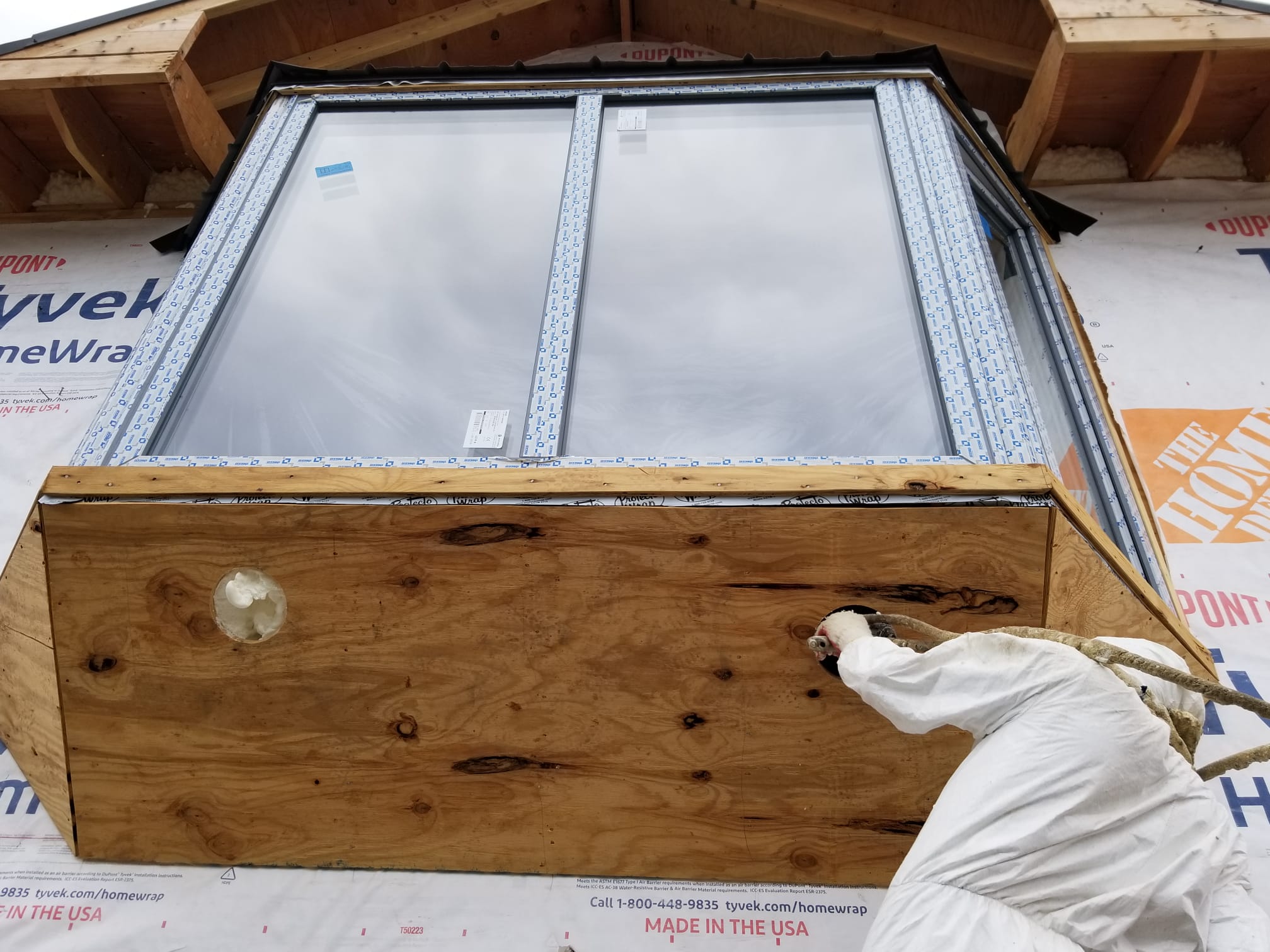
  • Exterior walls — during renovations, when the cavities are open and the opportunity is there.
  • Basements and crawl spaces — cold floors and damp air usually start here.
  • Floors and walls between units — for noise between apartments or between a business and the homes above it.
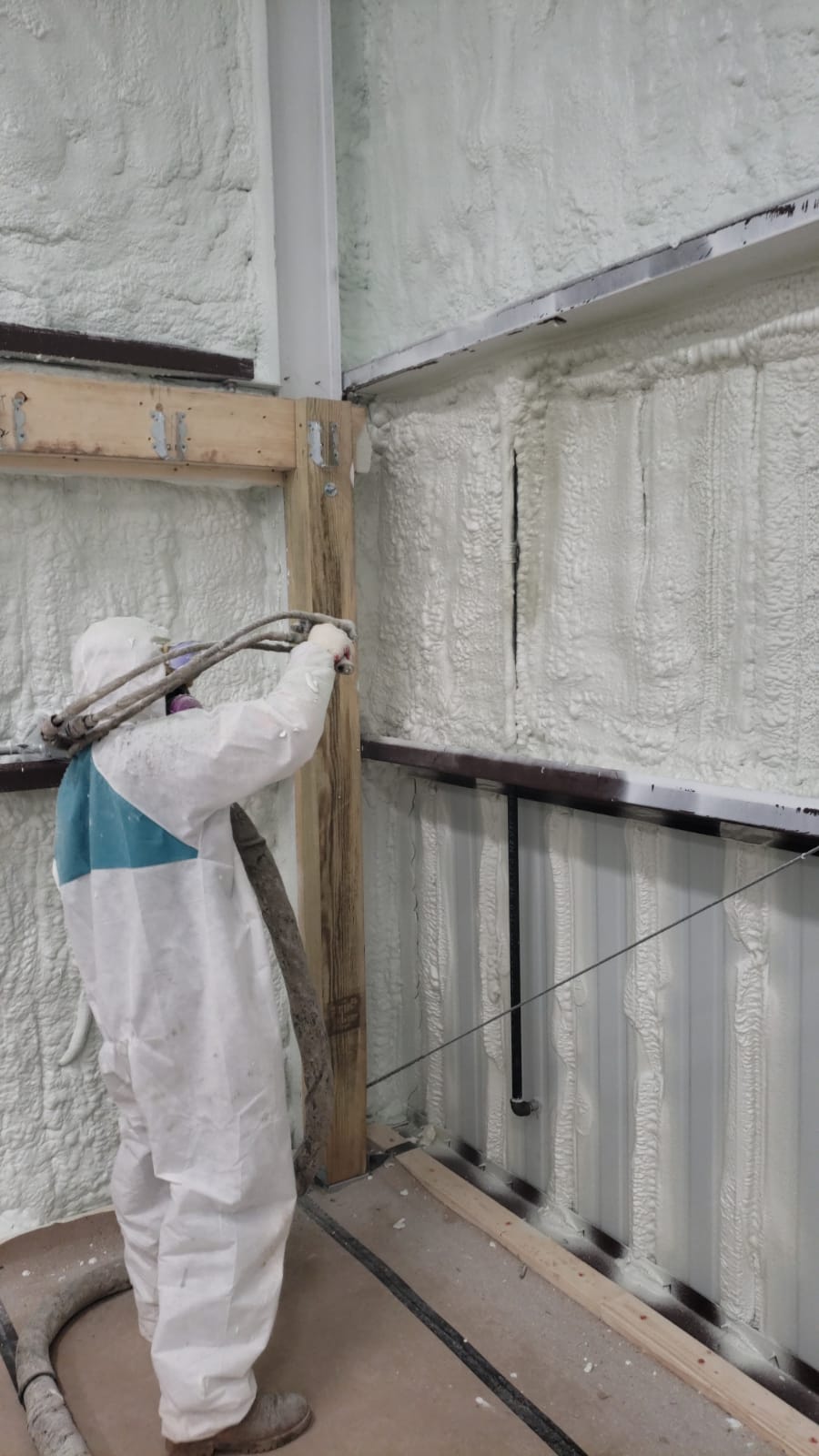
  • Commercial interiors — offices, shops, workshops and storage spaces that are expensive to heat and cool.

We work in single-family houses, apartments and commercial buildings. During a renovation, foam is installed after framing and before drywall.
Puza
Puza
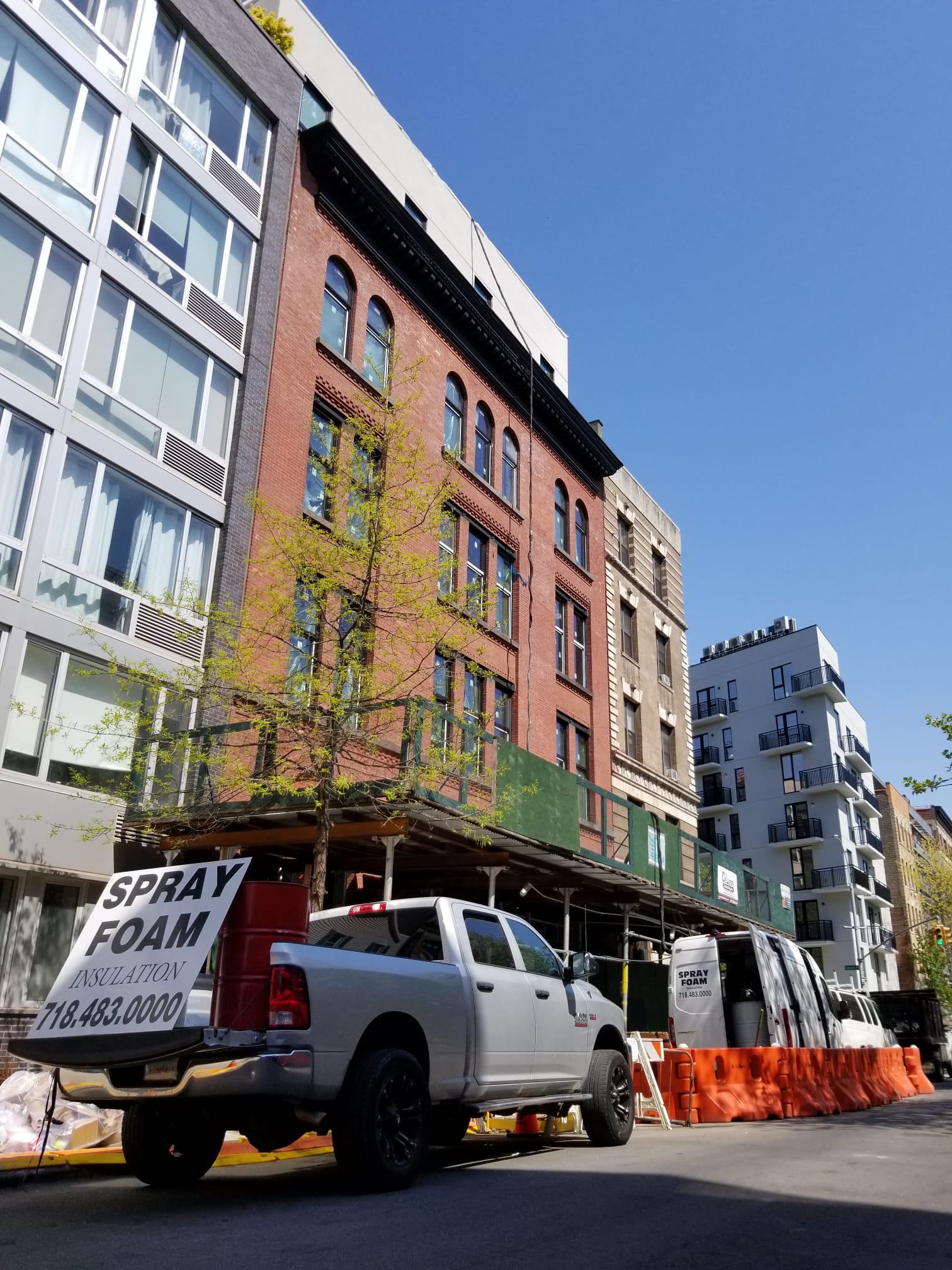
Puza Construction truck and van parked outside a brick building on a New York street

How a project runs

  1. 01

    It starts with a free estimate. We come out, look at the space and ask what you want to change about it. You get a clear description of the work, the type of foam we recommend and a quote. If part of what you had in mind is not worth doing, we will say so.

  2. 02

    On the day of the job, the crew prepares the area first. Floors, windows, fixtures and anything else that should stay clean are covered. Then the foam is sprayed to the planned thickness, section by section.

  3. 03

    After it cures, we trim any foam that sticks out past the framing so the next trade has a flat surface to work with. Then we clean up. Trimmings and coverings are bagged and leave with us.

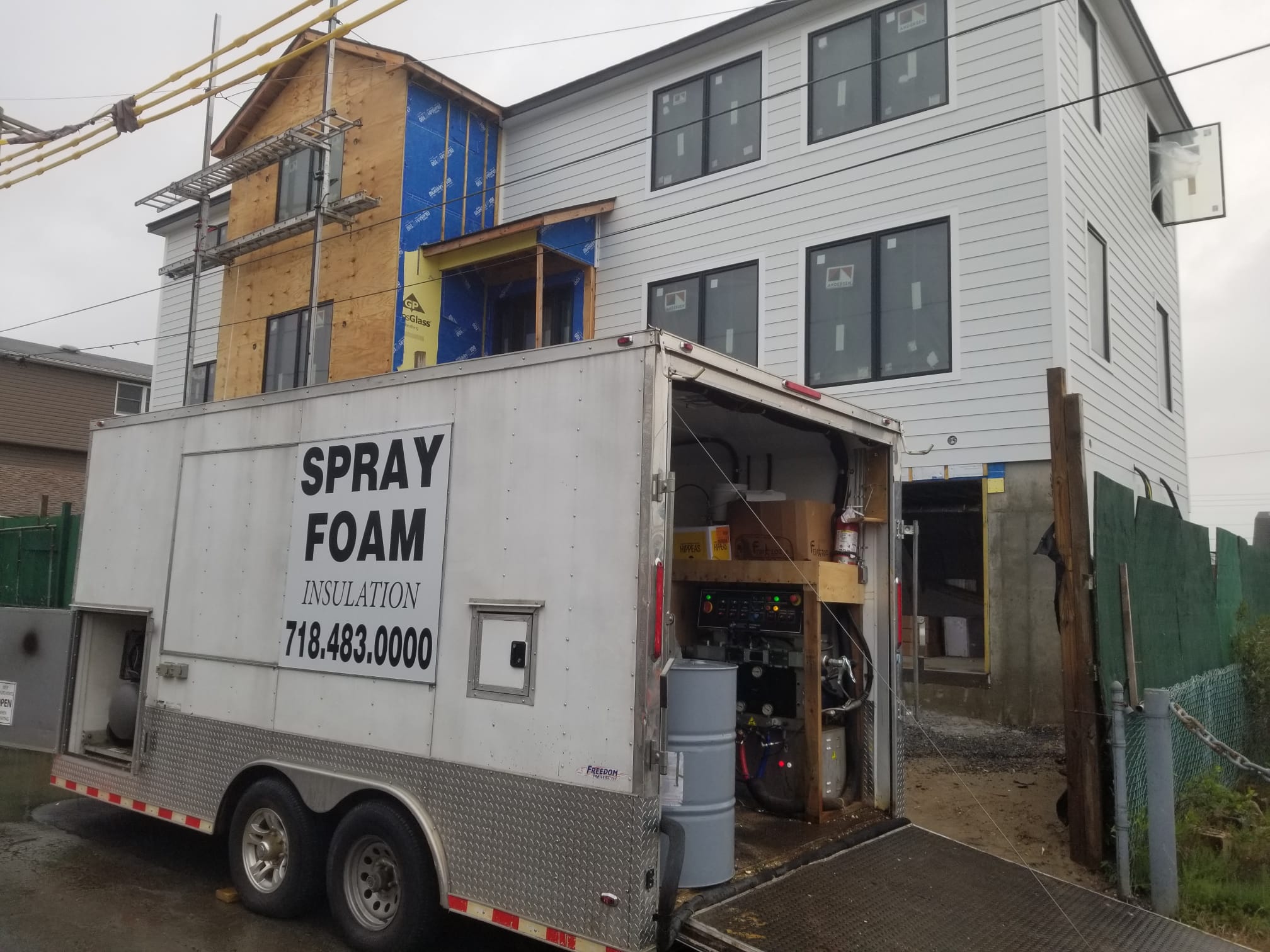
Spray foam trailer at a new three-story building

Spray foam in New York buildings

New York's housing is old, and much of it was built with little or no insulation in the walls. Attached brick houses, frame homes from the early twentieth century, brownstones cut into apartments — they all leak air in ways newer buildings do not. Add cold winters, humid summers and a neighbor on the other side of a shared wall, and you have a city where insulation does real work.

Local conditions shape the job. Access can be tight. Renovations often happen one floor at a time while people live in the rest of the house. Mixed-use buildings need quiet between the storefront and the apartments.

We plan for all of that before the truck arrives.

What does it cost? It depends on a few things: the size of the area, the type and thickness of foam, how easy the space is to reach and how much preparation it needs. That is why we give a quote after seeing the job. The estimate itself costs nothing.

Frequently asked questions

01Is spray foam better than fiberglass?

They do different things. Fiberglass slows heat but lets air pass around and through it. Spray foam insulates and seals in the same layer, so it also stops drafts and reduces noise. In older New York buildings with many gaps, that air seal is usually where the difference is felt.

02Can spray foam be installed in a house that is already finished?

Yes, in the areas that can be reached. Attics, basements, crawl spaces and rim joists are usually accessible without opening anything. Finished walls are different: foam is normally installed there during a renovation, when the cavities are exposed. We will tell you at the estimate what is practical.

03Does spray foam really help with noise?

It does. Foam fills the cavity completely and closes the small gaps that sound travels through, so airborne noise such as voices, television and traffic is reduced. Open-cell foam is the stronger choice for sound. It does less for footsteps and other impact noise, and it will not make a room silent.

04How long does the installation take?

It depends on the size of the area, the type of foam and the preparation needed, so we give you a time frame with the estimate. You will know the schedule before we start, and when the space can be used again afterward.