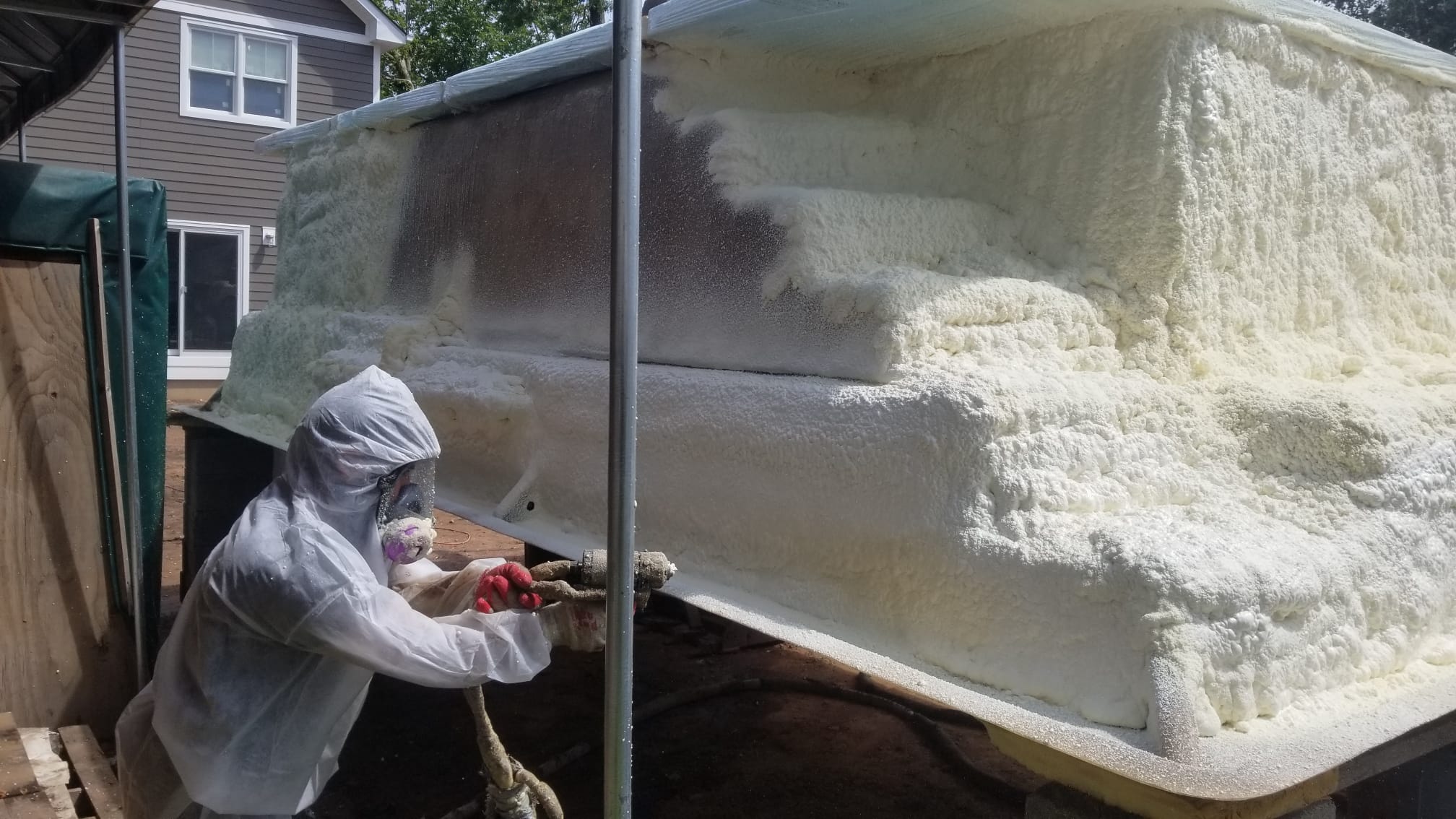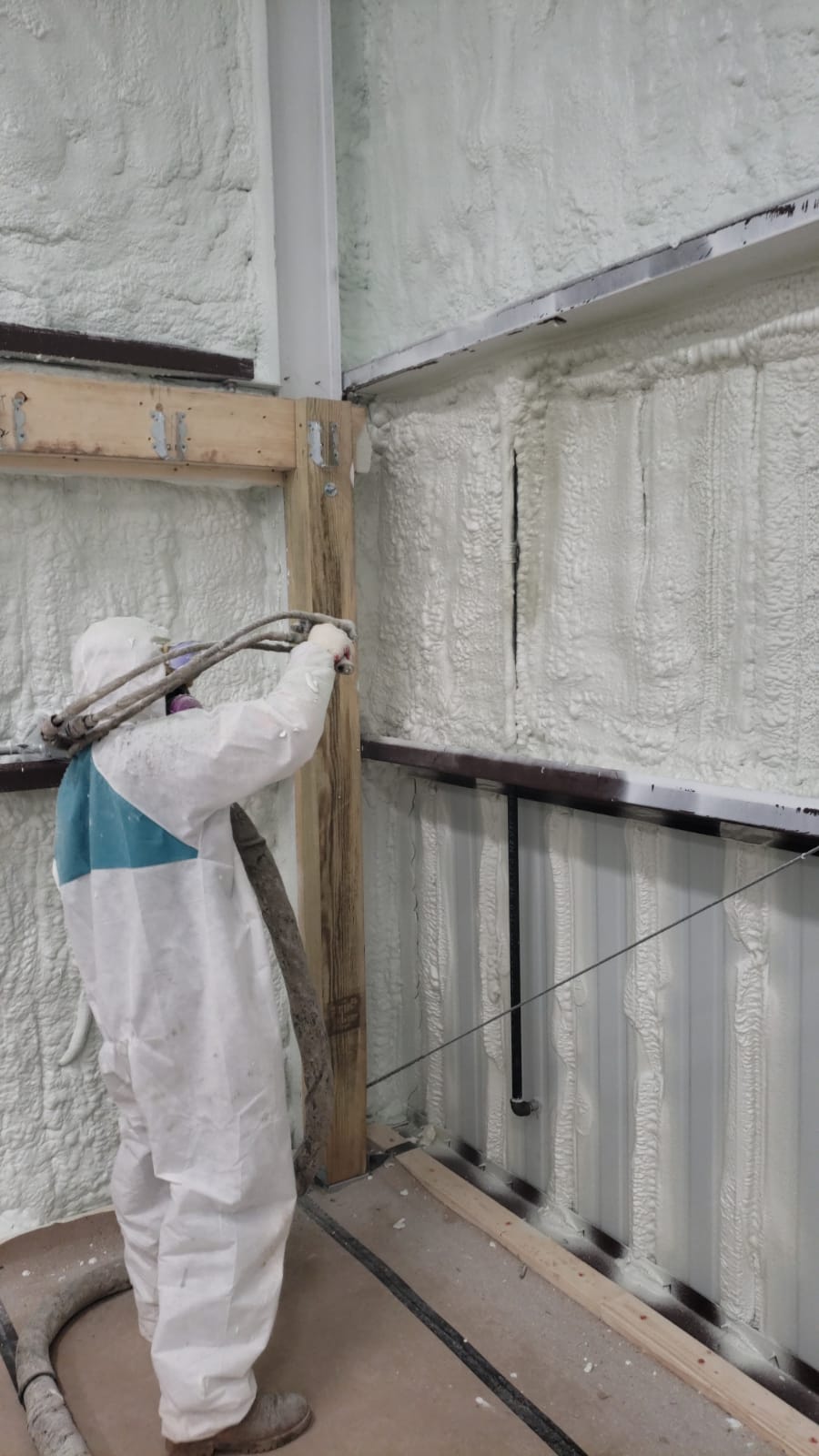
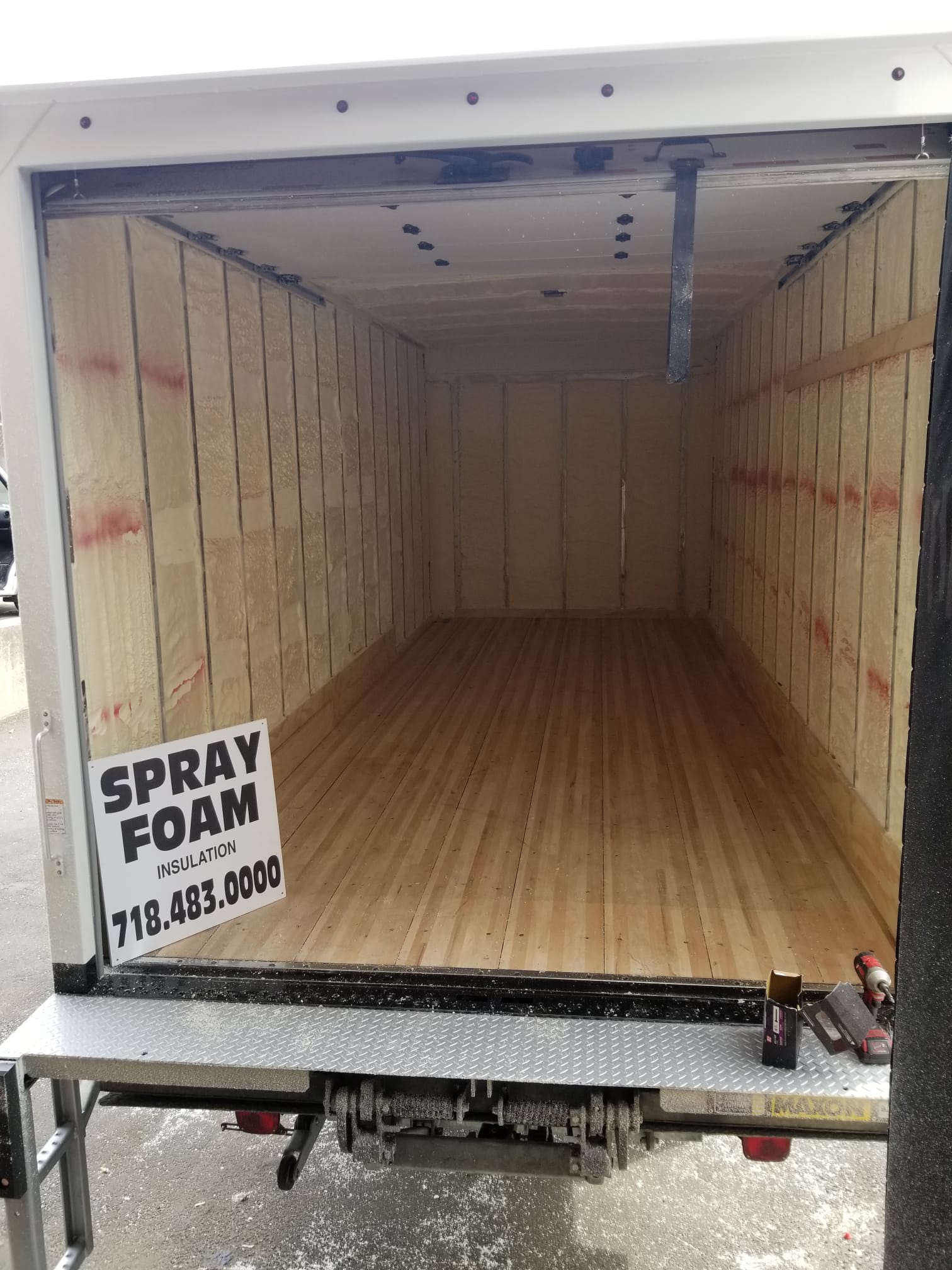
Truck and van insulation is spray foam applied to the walls, ceiling and floor of a vehicle's cargo area. The foam bonds to the metal, forms a continuous layer and keeps the interior temperature steadier, reduces road noise and adds stiffness to the body panels of the vehicle.
A bare cargo box is a metal shell. In August it holds heat like an oven. In January it is as cold inside as out, and condensation runs down the walls. Whatever you carry, and whoever works back there, gets the worst of both seasons.
Puza Construction, Inc. insulates trucks and vans with spray foam, alongside its work in buildings.
What foam does for a vehicle
Sheet metal conducts heat fast. Loose insulation panels help a little, but they leave seams, and they cannot follow ribs, wheel wells and curved corners. Sprayed foam can. It bonds directly to the metal and covers the whole surface without a break.
The first result is temperature control. The cargo area warms up and cools down much more slowly, so the load is better protected and any heating or cooling equipment on board has less work to do.

The second is sound. An empty van drums. Panels vibrate, the road comes up through the floor, and rain on the roof is loud enough to end a phone call.
A layer of foam deadens the panels and quiets the whole vehicle.
The third is structure. Closed-cell foam cures hard. Bonded to the walls, ceiling and floor, it stiffens the panels and helps the body feel more solid. Covered metal also gives condensation less surface to form on.
Who it is for
- Delivery and distribution companies that carry goods sensitive to heat or cold.
- Food and produce transport, where a stable interior helps protect the load.
- Contractors and tradespeople who use a van as a mobile workshop and keep tools, materials and adhesives inside year-round.
- Mobile businesses working out of a truck or van.
We work with single owner-operators and with companies that run several vehicles. If you have several vehicles, tell us, and we will work out a schedule with you.